Faculty Bio
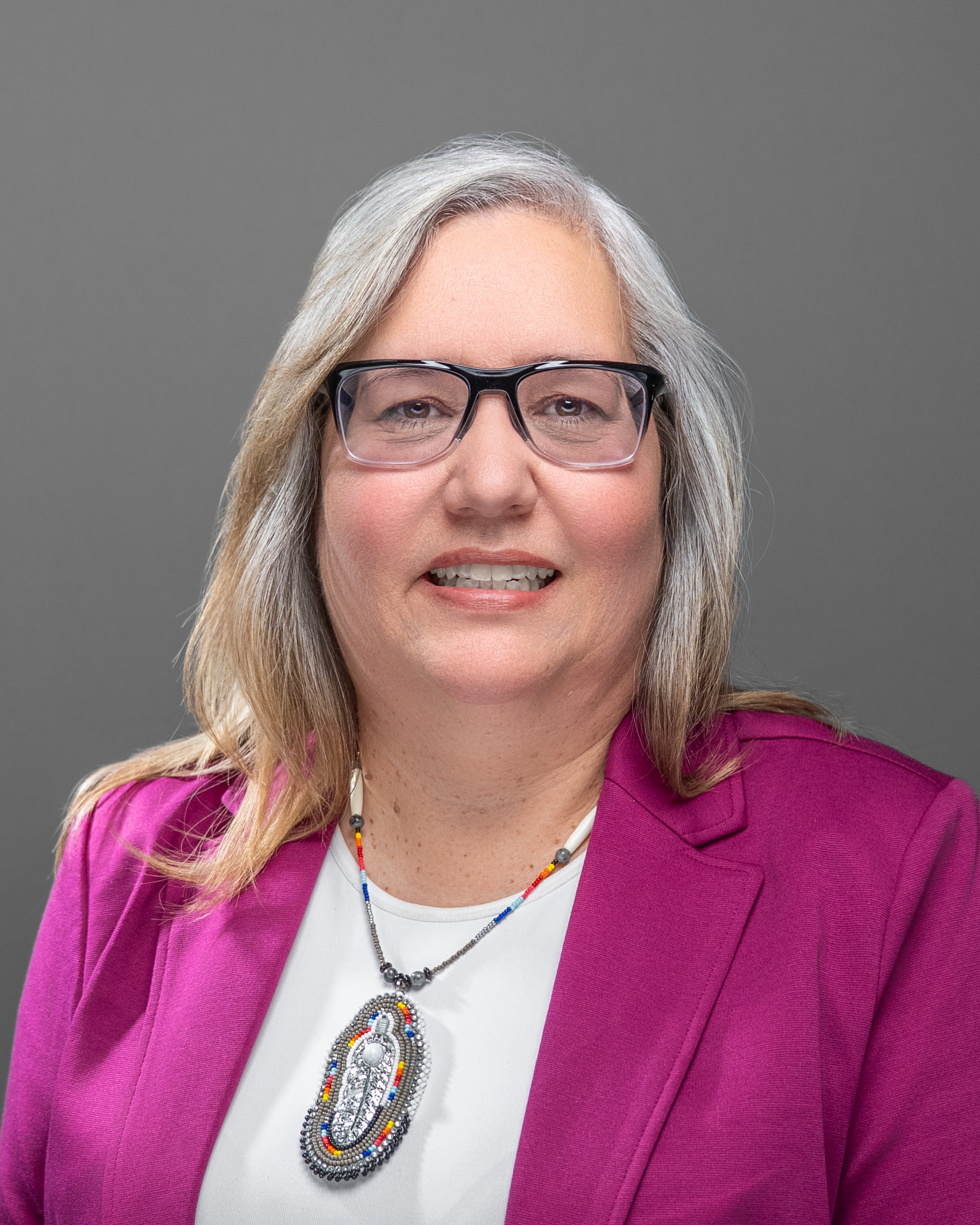
Dr. Teresa Miles
Assistant Professor, Education
Phone: 403-254-3733
Email: teresa.miles@stmu.ca
With roots in both Cree and Ukrainian heritage, I am a proud member of the Opaskwayak Cree Nation (OCN) in Manitoba, part of Treaty 5 territory. I will always be grateful to OCN as they supported me fully in my educational journey, through many years and multiple degrees. My academic journey has led me to earn a B.A. (Hons) in Criminal Justice, a Master of Education, and a Doctor of Education. My research has focused on “The emotional experiences of non-Indigenous educators teaching Indigenous curricula: exploring reconciliation through narrative inquiry”. This work is deeply personal and meaningful, reflecting my commitment to fostering reconciliation, understanding, and collaboration between Indigenous and Non-Indigenous educators, students and communities.
Beyond my professional life, I am a wife, mother to four, stepmother to two, mother-in-law to three, Kokum/grandmother to five, sister, aunt, and friend to many. These roles bring me immense joy and fulfillment, and they keep me grounded in what truly matters.
In my free time, I enjoy immersing myself in music, exploring Indigenous art, and cooking, all of which allow me to express my creativity. My life is enriched by my connections with family, friends, and community. I am also a member of “Indigenous Women in Spirit” community group. I am grateful for the opportunity to share my passions and knowledge with others and look forward to exploring new opportunities as they enter my life.
I strive to be the embodiment of a lifelong learner. My role involves creating learning opportunities that are inclusive, engaging, and culturally relevant, drawing on my own experiences and research to support academics. I believe education is a powerful tool for reconciliation and personal growth, and I am passionate about making a positive impact in this field.
My work has allowed me to engage with educating Indigenous and non-Indigenous students in the study of Indigenous ways of knowing, being, and doing. My approach to Indigenous education has always been that it should be value-added, building on existing curricula, whether that be in research, teaching, or learning. Part of the process in reaching this goal is to be aware that Indigenous education be inclusive and culturally safe for all. I am pleased to be teaching Indigenous Education as a full-time faculty member at StMU. As I continue in my educational journey at StMU, I look forward to many enriching experiences as I pursue my role in Indigenous engagement.
Specialization/Research Interest
Reconciliation, Indigenous Education, Indigenous Research, Indigenous Instructional Design, Indigenous Engagement, Narrative Inquiry, Storyworks, Qualitative Research Methodologies
Education
Doctor of Education (Curriculum in Context), University of Calgary, 2023
Master of Education (Leadership in Learning), University of Calgary, 2019
Bachelor of Arts with Honours (Criminal Justice), Mount Royal University, 2012
- Miles, T. M. & Hazelwood, K. (2025 - Ongoing) Defining Quality in Indigenous Education. Partnership with Queensland University of Technology; Policy analysis; Comparing Australian Professional Standards for Teachers with Alberta’s Teaching Quality Standards; Language and its impact on standards; Examining how quality is defined; Reviewing education goals
- Miles, T. M. (current-March 2026). Alberta Deans Business Case Competition. Partnership with SAIT. Planning, Creation, and design of the business case for analysis for the 2026 Case Competition; Ensuring Indigenous context is respectfully implemented
- First Rider, W., Hanson, A. J., Houle, A., McCallum, P., Miles, T. M., Plante, M., & Spring, E. (2023) Changing the story: Indigenous youth belong in postsecondary education (Oo’mahn’istay Iikakimaaks: You’ve Got a Story- Next Steps to a New Beginning). Alberta Journal of Educational Research.
- Hanson, A. J., Miles, T. M., Plante, M., & Spring, E. (In Process) Understanding Indigenous students’ perceptions of well-being: A case study in equitable urban education